Some destinations immediately fill your field of vision. Oman almost does the opposite: it creates room. The horizon widens, buildings become scarce and the landscape regains its place as soon as the road leaves the city. This is not an emptiness designed to impress. Its effect is gradual, and it appears when each day is no longer treated as an inventory.
Choosing Oman for its sense of space does not mean seeking isolation. The journey still includes villages, markets, cafés, conversations and gestures of hospitality. This alternation gives the journey its particular cadence.
Why does Oman feel so spacious?
Geography is the first reason. Landscapes unfold in broad sequences rather than tightly packed scenes. Leaving Muscat means entering the foothills of the Hajar, following a valley or crossing a plateau before another environment appears. Distance is not merely a transfer; it prepares the eye and signals that the journey is changing register.
The second reason is the way places reveal themselves. Many powerful experiences sound simple: walking early, watching light move over rock, swimming, having coffee, waiting for the heat to ease. Their value depends less on staging than on the traveller’s availability. That availability cannot be accelerated. It emerges when the itinerary stops demanding a departure or a decision every hour.
In Oman, space comes not only from the scale of the landscape, but from the time you allow between places.
Mountains, wadis, desert and sea: four ways to breathe
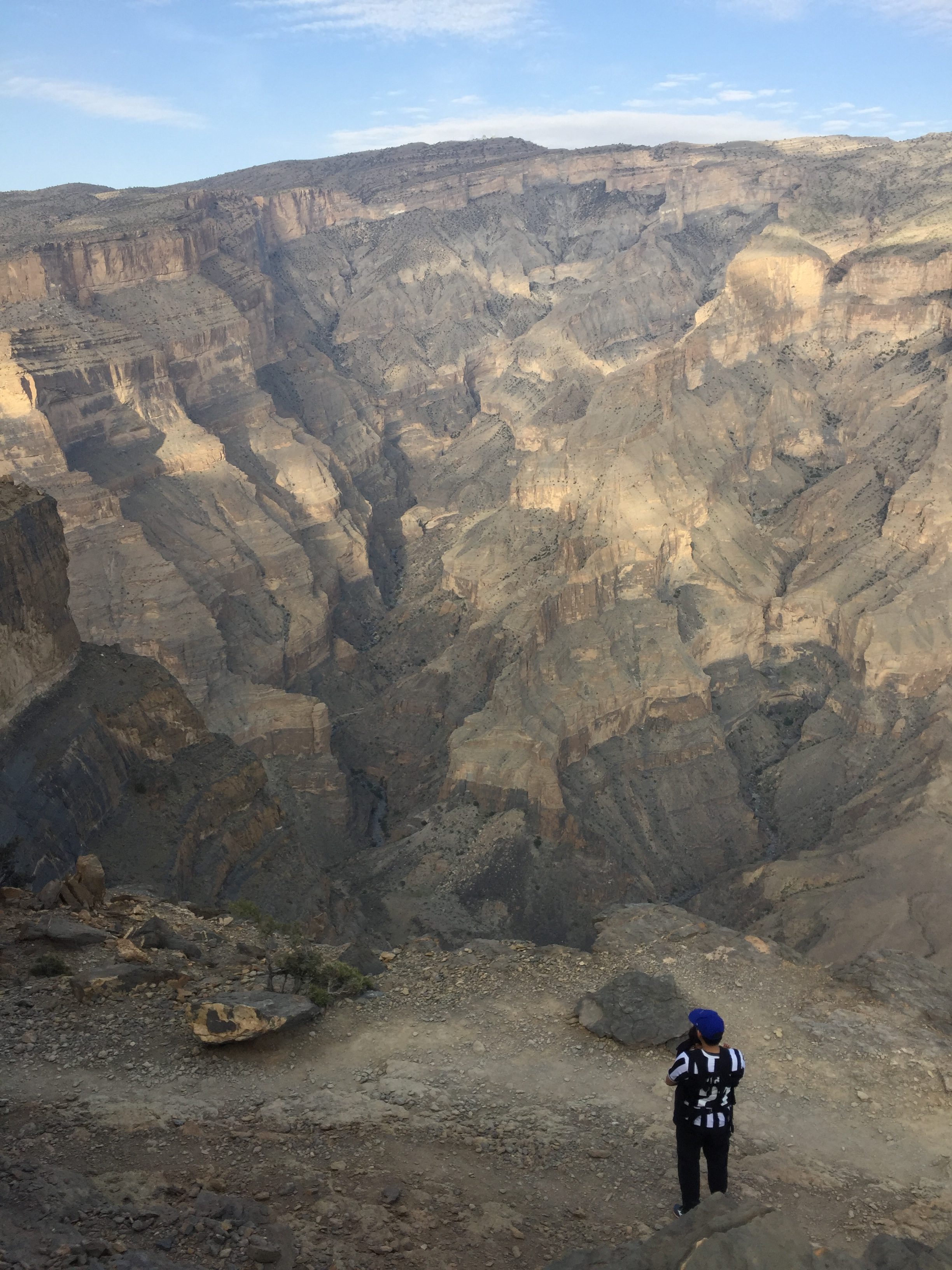
Mountains change your sense of scale
In the Hajar, the road climbs and naturally slows. Villages, terraces and mineral walls give the journey another measure. Temperatures may soften and evenings become quieter. This stage usually deserves at least two nights: arrive, walk the following day, then leave without feeling that you merely passed through.
Wadis restore movement
Wadis bring water into a mineral landscape. Some are easy to reach; others require walking, a suitable vehicle or careful attention to the weather. Their value is not found in collecting pools. One well-chosen wadi can create a complete change of pace.
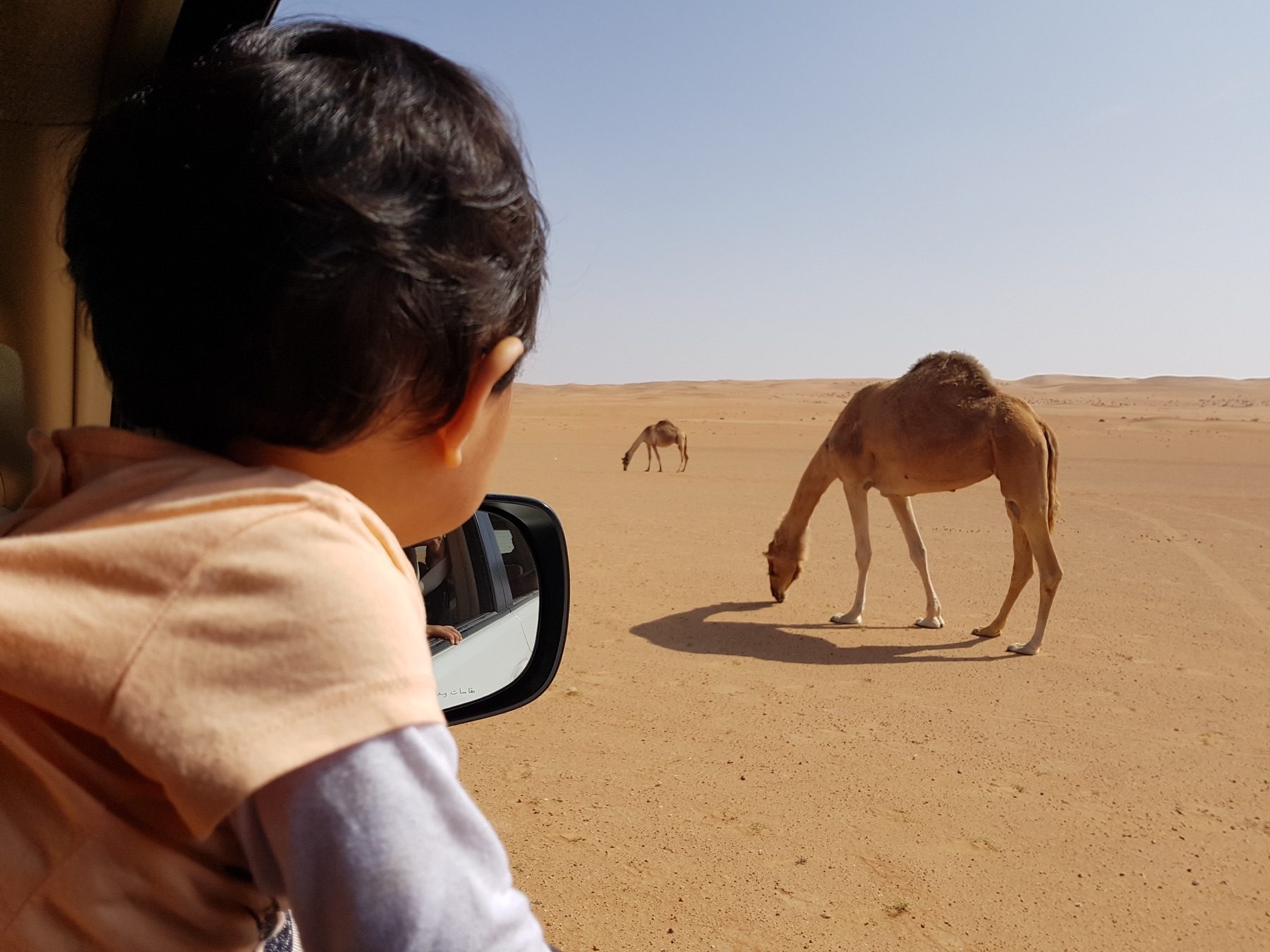
The desert lets the noise fall away
In the Sharqiyah Sands, the crossing begins before sunset: the gradual move from road to track, the changing colour of the dunes, then night. One night offers a glimpse; two allow a deeper settling in. The right choice depends on comfort, children’s ages, the season and whether you seek activity or rest.
The sea closes the journey gently
Oman’s coast can offer a softer ending: swimming, walking, observing the shore or simply leaving time unplanned. Not every coastal stretch serves the same purpose, however. Some fit naturally into a discovery route; others require a substantial detour. NAWA looks at the journey as a whole rather than adding the sea by default.
Why the itinerary should not be overloaded
On a map, Oman makes it easy to add more. A fort looks close to a village, a wadi seems to fit before the desert and a coastal stop appears possible between two nights. In reality, driving times, heat, changes in relief and spontaneous stops reshape the day. An overloaded programme turns the country’s breadth into early departures and late arrivals.
The slower approach here is a way to preserve enough energy to feel. This pace takes shape over the full length of the journey. After an intense day, a free morning or a second night in the same place may transform the experience.
This journey may suit you if…
- you enjoy open landscapes and natural contrasts
- you accept that some days are shaped by the road
- you prefer a few deeper experiences to a long checklist
- you want reassuring structure without constant entertainment
Oman may suit you less if…
- you want intense nightlife or continuous urban activity
- you strongly dislike driving or mineral landscapes
- you expect a dense concentration of sights within walking distance
- you want to improvise the entire journey in peak season without compromise
What pace, duration and season?
For a first journey, nine to twelve days form a coherent base. This generally allows Muscat, mountains or wadis, desert and a coastal opening without changing hotels every night. Seven days can work with a tighter area. Beyond twelve, extra regions or longer stays become possible without weakening the rhythm.
October to April is the most comfortable period for most routes, although temperatures differ between coast, mountains and desert. December and January may bring cool evenings at altitude. October, November, March and April offer other balances with warmer days. The season should therefore be chosen around the actual regions and activities, not a national average.
What NAWA can organise
NAWA can connect these landscapes without reducing them to a sequence of points. We choose the right bases, estimate realistic timings, adapt the driving, select addresses for both location and atmosphere, and decide what must be booked and what can remain open. For families, children’s energy and the hottest hours reshape the plan. Couples may prefer more unscheduled time. Active travellers need walks balanced with real recovery.
Key points
- Oman creates space through the breadth of its landscapes and the transitions between them.
- Nine to twelve days around three main bases usually protects the experience.
- Preparing distances, season and pace leaves genuine room for the unexpected.